This is a collection of Indigenous-made resources within the History genre.

Finding a Canadian History textbook is quite easy, but finding one that features Canadian history through an Indigenous perspective in more than just one or two pages is quite difficult. This entire textbook is a telling of Canada’s history, from pre-contact to modern times, all from an Indigenous-focused perspective. It is written by a professional historian William Newbigging and by Olive Patricia Dickason who is Métis and was Canada’s first scholar to receive a PhD in Indigenous history.
This is a history textbook aimed for University students, but is quite usable in high school classes. It does not have lots of pictures and cool graphics that most high school-oriented texts have, but is not written in an academically complicated language. Grade 10 high school students should easily be able to read this. I would recommend taking passages from this textbook and coupling it with pictures and videos that can be found from the internet for an enjoyable reading experience for your students. Otherwise, this could be used for you to read and create your own lesson plan based around what you’ve read.

For teachers within the American history field, this is similar to the previous resource, but for the United States of America. This book is the first to provide a comprehensive telling of American history from the perspectives of various American Indigenous groups. The author, Roxanne Dunbar-Ortiz, is part-Indigenous herself and is a well-known Indigenous activist. She also is a respected scholar, receiving a PhD in history.
Again, just like the previous resource, this book is written for a University audience. That being said, it is written in an understandable form of English free of unnecessary academic jargon and therefore can be easily understood by high school students. Adding pictures and videos to passages from this text would make this an enjoyable read for students.
Even better is that this book comes as an audiobook as well and can be purchased on CDs. This adds flexibility to your lesson plans if you don’t want to force your students to read or have students with special needs.

Viola, Herman J. Warriors in Uniform. New York: National Geographic, 2008.
This is another resource for American history, focusing on highlighting Indigenous contributions to United States’ various wars from the 1700s to modern times. This illustrated history of Indigenous heroism is an in-depth look at Indigenous peoples serving in the American armed forces, from the U.S Civil War to Operation Iraqi Freedom. It is written by Herman J. Viola, an Indigenous author with ancestors that fought for and against the US government during the Indian Wars. This book has been meticulously put together to include voices from indigenous nations across the United States.

Viola, Herman J. Little Bighorn Remembered: The Untold Indian Story of Custer’s Last Stand. New York: Times Books, 1999.
For teachers teaching American History, this book will be useful. This book recounts the United States’ Battle of Little Bighorn featuring Lieutenant Colonel George A. Custer. However, unlike most other sources, including the websites I have linked, this book features Indigenous oral histories that have been past down generations and collected by the author, Herman J. Viola.
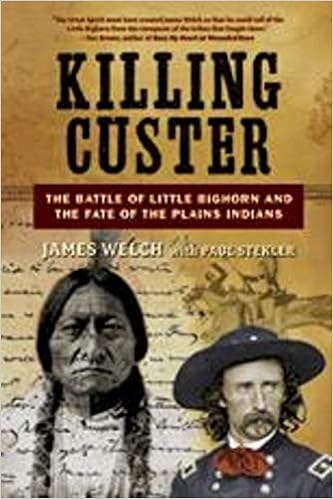
James Welch, a member of the Blackfoot Confederacy in the United States, who is a respected author of several books, also wrote on the event of the Battle of Little Bighorn. His book, Killing Custer, began in 1990 as a film project and was a collaborative effort of different writers including James Welch. After airing, Welch continued his research which culminated in the production of Killing Custer, a new indigenous-based look at the infamous military persona. In Killing Custer, Welch presents the facts with honesty, imagination, and empathy visiting those times, places, and lives and seeing them as if for the first time.
For teachers looking for a comprehensive lesson plan about this topic with options for History, English (including poetry), and Art classes, see this PDF.

For those looking for something outside North America, this beautifully written memoir that won a Nobel Peace prize is highly recommended. It focuses on the life of Rigoberta Menchú, a Guatemalan Indigenous woman who goes through situations similar to most Indigenous community members in Latin America. It goes through the Latin America’s light-skin/dark-skin divide as well as other issues. It’s a story of not only her struggles, but her triumphs in political revolt. This book is also available in audiobook format.

The Memory Project
http://www.thememoryproject.com/
Moving back to Canada, this amazing website has recordings of veterans telling their own stories about their war experiences in their own words. Soldiers from WW1, WW2, The Korean War and peacekeeping missions record their stories for us to listen. The recording are short and are accompanied by a transcript. It really makes history come alive for students! One of the stories it features is Howard Sinclar Anderson, an Indigenous veteran, speaking about his experiences.

Continuing the topic of voices from Indigenous peoples, They Called Me Number One, is Bev Sellars recounting her experiences in Canada’s residential school system. Bev Sellars is a Xatsu’ll chief who has written books and received degrees in history and law. Before all of that, however, she was forced into residential schooling at St. Joseph’s Mission in British Columbia. This memoir is available in print and in audio format, performed by Bev Sellars herself.

Webb, George. A Pima Remembers. Tucson: University of Arizona Press, 1959
Webb presents a vivid recounting of oral histories preserved by the Pima people through storytelling and song. The history describes a culture of happiness and perseverance in the face of cultural conquest throughout the 19th and early 20th Centuries. It can be accessed for free here or purchased on amazon.ca here.

Underwood, Paula. Who Speaks for Wolf: A Native Learning Story as Told to Turtle Woman Singing by Her Father, Sharp-eyed Hawk. Indiana: Tribe of Two Press, 1983
Paula Underwood’s work helped to rekindle the Native American “learning way” or learning stories. Underwood uses the oral tradition of storytelling to present allegorical learning in a post-colonial world. The way in which she presents the lesson is rooted in tradition and incorporates key aspects of Indigenous knowledge. It can be accessed for free here.

Alfred, Taiaiake. Peace, Power, Righteousness: An Indegenous Manifesto: Oxford Press, 2008
In this book, Taiaiake Alfred, a Bear Clan Mohawk, shows how advocacy, resilience, and a desire to stand up to systemic injustice can have a major impact on the way our society is formed. Alfred calls for self-determination through a wide variety of methods and calls out our current system for its inequity.

Nick Estes (Lower Brule Sioux) is an assistant professor in the American Studies Department at the University of New Mexico, and has written on the topic of Indigenous resistance for a number of publications. Our History is the Future is both a work of academic history and an analysis of Indigenous political resistance in Turtle Island. The text, or sections of it, are an ideal point for students of Civics to examine the roots and methods of Indigenous civil action. This book is available in print and in audiobook format.

Amazon.ca describes this comic book perfectly. They write the following:
The 500 Years of Resistance Comic Book is a powerful and historically accurate graphic portrayal of Indigenous resistance to the European colonization of the Americas, beginning with the Spanish invasion under Christopher Columbus and ending with the Six Nations land reclamation in Ontario in 2006. Gord Hill spent two years unearthing images and researching historical information to create The 500 Years of Resistance Comic Book, which presents the story of Aboriginal resistance in a far-reaching format.
This graphic novel is a fantastic resource for the secondary civics or history classroom. Covering 500 years of Indigenous resistance to colonization throughout the Americas, Hill’s graphic text is based on years of research and includes authentic illustrations based on historical images.
Kanehsatake: 270 Years of Resistance
This is a heart-wrenching documentary puts you on the ground during the Oka Crisis. You watch the crisis from the Indigenous perspective with some perspectives from police and news organizations. It is a fantastic documentary that is a must-watch! Directed by Alanis Obomsawin.
Alanis Obomsawin is an Abenaki director known for several high quality documentaries that showcase Indigenous perspectives on various events.
Trick or Treaty
Another great documentary by Alanis Obomsawin that provides the history behind Treaty #9. It delves into how the treaty created inequality and distrust within Indigenous communities, and how it continues to have a role today in how services are delivered.
 Classroom Perspectives